

When Relationships Become Too Correct
One of the most surprising things I observe in my work with couples is that intimacy rarely disappears because of major conflicts. More often, it gradually dissolves almost unnoticed under the weight of everyday seriousness.
People continue to love each other, care for one another, build a life together, raise children, plan for the future, and remain reliable partners. From the outside, such relationships appear mature and stable. Yet internally, a feeling begins to emerge that is difficult to put into words. Everything seems fine. The relationship works, the family functions, responsibilities are handled. But somehow there is less interest in each other, less lightness, less laughter, and less desire to spend time together.
Gradually, partners begin to resemble not two people in love, but highly efficient managers running one large project called “family.”
Over the past several decades, relationship researchers have tried to understand why some couples maintain emotional and sexual closeness after many years together while others slowly shift into a mode of mere co-functioning. One of the most influential experts in this field, psychologist John Gottman, spent more than forty years studying married couples and arrived at an important conclusion: relationship stability depends not only on how people handle conflict, but also on how often they create positive emotional connections in everyday life.


According to his research, happy and stable couples experience roughly five positive interactions for every negative one. Importantly, this is not about romantic vacations or expensive gifts. It is about shared laughter, playful teasing, affectionate touch, light flirting, meaningful glances, and small moments of curiosity and playfulness with one another.
These are often the very first things to disappear.
Why Many Women Become the “Second Man” in the Family
When discussing this topic, it is important to dispel a common myth immediately. This is not about women becoming weak, helpless, or giving up responsibility.
Over the past few decades, women have gained tremendous opportunities. They build businesses, lead companies, manage teams, support families, and make strategic decisions alongside men. Yet many women have also found themselves carrying a double burden. They are expected to be successful professionals, emotional anchors for their families, organizers of household life, and people capable of handling almost everything.
Gradually, an interesting psychological phenomenon emerges. A woman begins to live primarily through her functions: organizing, controlling, solving problems, anticipating challenges, and managing everything around her.
This is where what some therapists jokingly call the “second man in the family” phenomenon appears. Not because a woman becomes less feminine, but because her mind spends more and more time in problem-solving mode and less time actually experiencing life.
Research shows that people who live under constant responsibility display increased activity in neural networks associated with executive control and risk prediction. This is incredibly useful for managing a business or a family, but it creates another problem: the nervous system gradually loses access to spontaneity, playfulness, and emotional flexibility.
And these are precisely the states that form the foundation of romantic intimacy.
Why Control and Intimacy Do Not Mix Well
From a neurobiological perspective, control and intimacy belong to very different modes of nervous system functioning.
When a person is constantly in control mode, the brain is occupied with forecasting, assessing risks, and finding solutions. This state is essential for survival, achievement, and maintaining order. Intimacy, however, requires an entirely different quality of presence.
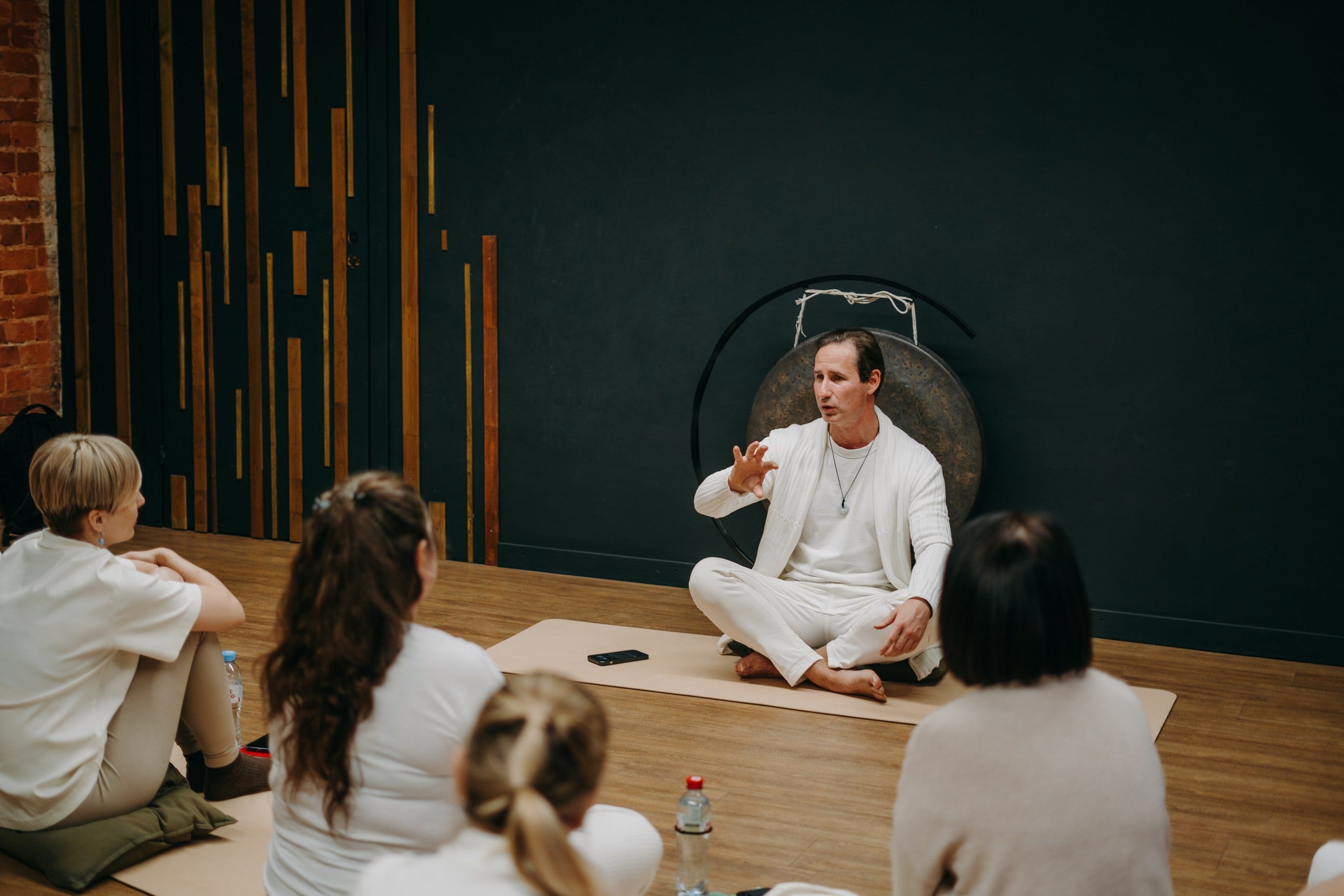
To remain interested in your partner, you must occasionally stop analyzing. To feel desire, you must step out of problem-solving mode. To experience emotional connection, you must allow yourself to be a living human being rather than merely a function.
This is why many women encounter a paradox: the better they become at managing life, the harder it becomes to feel lightness within their relationships. Everything may work perfectly on the outside, yet inside there is less and less room to breathe.
Why Play Is Not Childish — It’s a Biological Need 🎈
When we hear the word “play,” most adults automatically view it as something unimportant or immature. Modern research suggests exactly the opposite.
Psychiatrist and researcher Stuart Brown devoted decades to studying the impact of play on psychological well-being. His conclusions were surprising: a lack of play is associated with higher levels of anxiety, greater emotional rigidity, reduced creativity, and poorer relationship quality.
In essence, play is one of the nervous system’s fundamental biological needs.
When people engage in play, dopamine-based systems associated with motivation, curiosity, and emotional engagement become activated. This is why laughter, flirting, shared adventures, new experiences, and even harmless silliness are every bit as important as serious conversations about the future.
Researchers Arthur and Elaine Aron, creators of the Self-Expansion Theory, discovered another fascinating pattern. According to their findings, relationship satisfaction is directly linked to the amount of novel experiences partners share together.
In other words, people do not feel closer because they discuss household responsibilities for the hundredth time. They feel closer when they experience something new, unexpected, and emotionally meaningful together.
Relationships do not come alive through another serious conversation. They come alive through curiosity.
When a Woman Stops Being a Function
Perhaps the most important idea in this article is that intimacy rarely disappears because love is gone. More often, it disappears because vitality is gone.
Modern psychology uses the term relational vitality to describe the sense of energy, interest, emotional movement, and genuine connection between people. Research suggests that high relational vitality is associated not so much with the amount of time spent together as with the quality of emotional presence.


The problem for many adults is that they gradually begin to treat their lives as projects. They optimize processes, plan the future, constantly improve, fix, and control things, yet allow themselves less and less enjoyment of life itself.
Eventually, a woman may discover that she performs all her roles brilliantly while no longer feeling like a girl. Not childish. Not irresponsible. But alive. Capable of laughing, being surprised, flirting, making mistakes, and experiencing pleasure without guilt.
Sometimes the loss of intimacy is simply the loss of aliveness.
What Happens to the Body When We Stay Serious for Too Long 🧠
Over the past few years, neuroscience has increasingly confirmed what body-oriented therapists have observed for decades: chronic seriousness does not exist solely in the mind. It becomes written into the body.
Research suggests that prolonged periods of excessive control are associated with altered breathing patterns, increased muscle tension, reduced heart rate variability, and heightened activity in stress-response systems.
This becomes particularly evident during bodywork and somatic therapy. Women who describe themselves as rational, composed, and highly responsible often continue to hold tension in their jaw, neck, shoulders, chest, and diaphragm even when they are in a completely safe environment.
The body seems to continue carrying the responsibility of holding the world together.
This is why insight alone is often not enough. A person may understand their patterns, read books, attend workshops, and spend years analyzing their relationships. Yet if the nervous system still perceives relaxation as a potential threat, meaningful change occurs very slowly.
What We Observe Through the NeuroWave Method 🌿
Within the NeuroWave method, we regularly encounter an interesting phenomenon. When a person finally emerges from a state of chronic control, qualities that seemed permanently lost begin to return alongside relaxation: the ability to laugh for no reason, genuine interest in life, a desire to try new things, enjoyment of social connection, and the ability to notice beauty again.
People begin to feel their bodies more deeply and gradually stop living as though everything must constantly remain under control.
From the perspective of modern psychophysiology, this is entirely understandable. Stephen Porges’ Polyvagal Theory suggests that our ability to experience trust, intimacy, curiosity, and emotional engagement is directly linked to how safe our nervous system feels. When the body remains in a prolonged state of mobilization, it naturally prioritizes control and predictability over play, curiosity, and spontaneity.
The truth is that lightness never really disappears. More often, it becomes hidden beneath layers of chronic tension, responsibility, and the habit of controlling everything. This is why relationship work in NeuroWave often does not begin with relationships themselves. It begins with restoring a person’s connection to themselves.
Because it is impossible to bring lightness into a relationship when survival mode is constantly running in the background. It is impossible to play when the body is perpetually preparing to manage the next crisis. And it is impossible to feel genuine curiosity toward another person when most of your psychological energy is devoted to maintaining control.
Perhaps the problem in many relationships is not that people have stopped loving one another. Perhaps they have simply spent too long trying to be good adults and gradually forgotten what it feels like to laugh, be surprised, and truly live alongside each other.
Sometimes a relationship does not need another attempt to fix everything. Sometimes it simply needs the opportunity to become alive again. 🌿